Greek Town hosted Hippie Fest—and it was a beautiful collision of cultures.
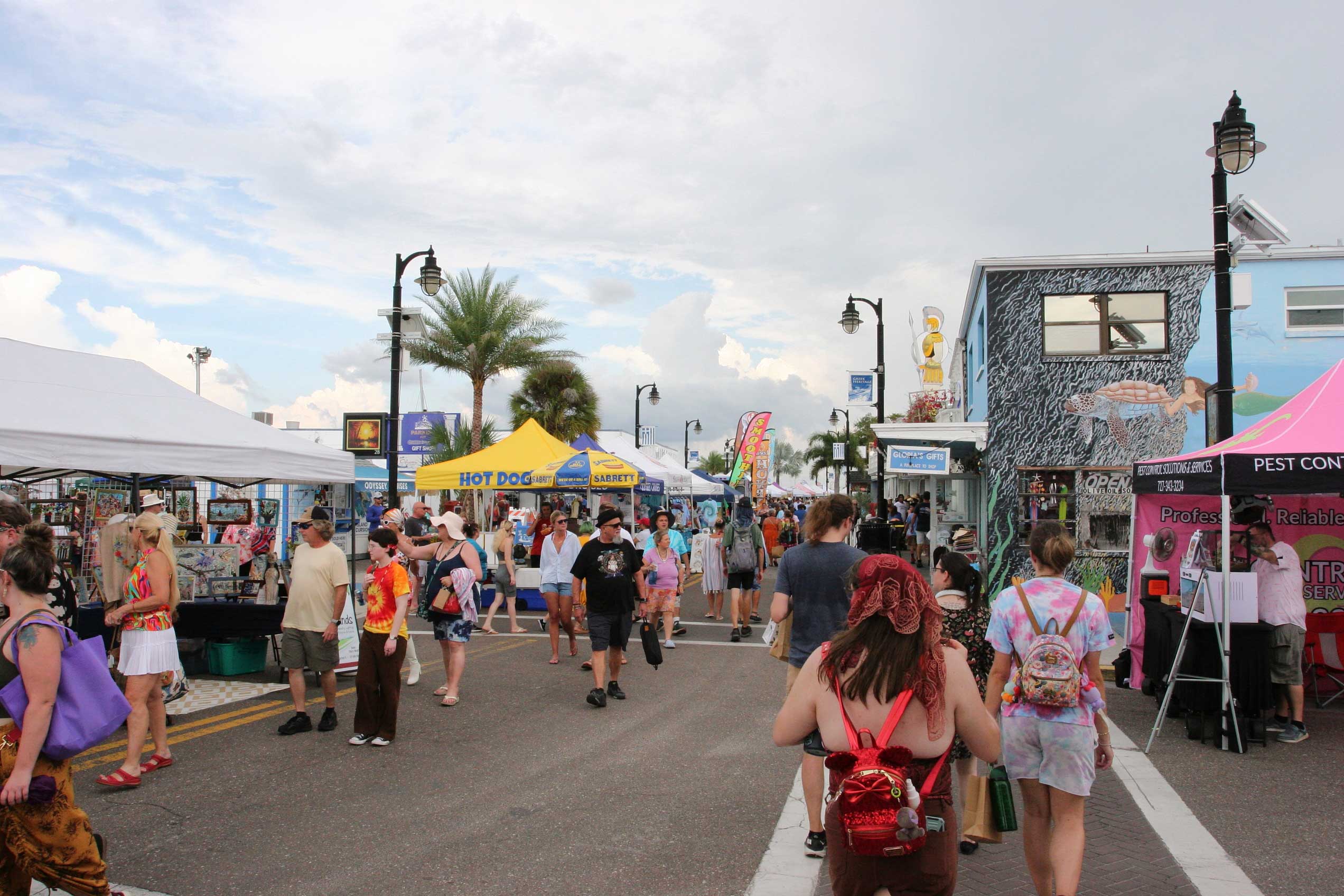
On Saturday, August 15, 2026, the strip along the Tarpon Springs Sponge Docks was loaded with vendors, food, music, and festival-goers who traveled from far and wide to experience a beautiful evening in this historic fishing village.
Hippie Fest Entertainer – Tarpon Springs, Fl.
Street view of vendors under pop-up tents on Dodecanese Boulevard
Hippie Fest vendors along Dodecanese Boulevard
Everywhere I looked, it was a photo opportunity. The sponge docks are a fishing village with a Greek heritage that dates back to the early 1900s. The rich history here allows us locals to immerse ourselves in the traditions of Greek settlers—and on this night, those traditions shared the stage with bell-bottoms and tie-dye.
Street-view shot of the storefronts for Chalkis Mediterranean Market and Nicos Grill House in Tarpon Springs Florida
A street-level perspective of the intersection at Athens Street and Dodecanese Boulevard
Sponge boat, Anastasi Tarpon Springs, FL
The “Sponge Diver” memorial statue, Tarpon Springs FL.
Memorial art installation of John M. Cocoris
Sponge Docks Shopping Village, Tarpon Springs FL.
View from the indoor courtyard of the Sponge Docks Shopping Village
Evening Energy on Athens Street
What We Saw
On a typical Saturday night, you might catch belly dancers swaying to the rhythm of Greek music at Mama’s Greek Cuisine restaurant, or browse storefronts filled with locally harvested fresh sponges, sweet treats, and Greek cultural merchandise. This evening, however, the local flavor expanded to include rock and roll, blues, funk, soul, and R&B.
The Hippie Fest also brought a classic Volkswagen car show, with groovy camper buses and cute, punch-buggy Beetles all decked out to put on a show. They were as much a part of the scene as the sponge boats and the fishing nets.
A large tent at the end of the strip hosted the entertainment stage, where live music kept the crowd moving all evening. The lineup featured:
St. Pete Sons Rock the Festival Stage – Tarpon Springs, FL.
St. Pete Sons Rock the Festival Stage – Tarpon Springs, FL.
St. Pete Sons Rock the Festival Stage – Tarpon Springs, FL.
St. Pete Sons Rock the Festival Stage – Tarpon Springs, FL.
St. Pete Sons
Greg Roy & The Pressure Band
The Black Honkeys Band (closing out the night)
The music carried across the water as people danced on the dock. The sunset painted the sky in shades of orange and pink—fitting for a festival that celebrated the best of the 1960s and 1970s in a town that feels like it belongs to another century.
A Personal Note
I walked the entire strip, camera in hand. I photographed the VW buses, the belly dancers, the musicians, and the families soaking in the evening. What struck me most was how seamlessly Greek heritage and hippie culture coexisted.
It was a reminder that Tarpon Springs is not just a tourist destination. It is a living, breathing community with layers of history—and on nights like this, those layers come together in beautiful, unexpected ways.
Evening Rest for the Southern Pride and Rick B – Tarpon Springs, FL
Until Next Year
Hippie Fest 2026 was a success. The crowds were happy. The music was loud. The vibes were groovy.
I left with a full memory card and a grateful heart.
The Douglas Parking Center at 968 Douglas Avenue is entering its most visible phase of construction. Starting in late August, crews will begin erecting the precast concrete structure of the four-story, 309-space public parking garage .
The good news? Most of the work happens without any road closures. Here is what to expect.
📅 The Construction Timeline
No Road or Lane Impact (Aug 24 – Oct 9)
From August 24 through October 9, the crane and all delivery trucks operate entirely within the property. Both lanes of Douglas Avenue stay open. Work hours are Monday–Friday, 7:00 AM – 5:00 PM, with no weekend activity.
Single-Lane Flagging (Oct 12 – Oct 23)
For ten working days, the final bay along Douglas Avenue requires the near lane. Traffic alternates through a single open lane under certified flaggers—the road stays open in both directions, with brief waits during active picks and deliveries. This phase begins the Monday after the Dunedin Art & Craft festival weekend (October 10–11), so the festival sees no construction activity.
Full Closure (Oct 26 – Oct 27)
The only full closure of the entire project is scheduled for Monday and Tuesday, October 26–27, when the crane is taken down. A signed detour routes traffic via Skinner Blvd., Broadway, and Main Street. Both lanes are fully reopened by Wednesday, October 28.
🚧 What to Know on the Ground
Work zone speed limit: 15 MPH
Deliveries end by 3:00 PM to avoid school pickup and evening commute
Pinellas Trail remains open throughout, with protective fencing at the site
Pedestrian access is maintained with marked crossings to the east sidewalk
Local business access is preserved on both days of the full closure
🏗️ The Bigger Picture
The Douglas Parking Center is the first phase of a two-phase, family-led investment in downtown Dunedin. Phase 2—the Main Street Exchange at 830 Douglas Avenue—will follow with an 89-room boutique hotel, a food hall, a 280-seat theater, and retail space. The parking garage is being built first, on purpose, so the parking arrives before everything else does.
Overall completion is targeted for the first quarter of 2027.
It was 2009. The economy had nose-dived, and foreclosures dominated the news. Across the country, people were losing their homes, their jobs, and their sense of certainty.
But in Dunedin, something else began to appear on the walls. Oranges.
No one knew who painted them. No one knew why. Merchants woke up to beautifully rendered citrus on their roll-down gates. Homeowners discovered oranges beside their front doors. Most residents loved stumbling across them, and guessing the culprit’s identity became a running community joke. The phenomenon grew so popular that some merchants even posted notes on their walls reading, “Hey, paint orange here!“
The mystery deepened when a downtown restaurant’s surveillance camera caught two figures in the act at 5:30 A.M. The tape was turned over to the Pinellas County Sheriff’s Department. Once authorities began asking questions, the culprits came forward and confessed.
Steven Spathelf, a local muralist, and Marsha Goins were the artists behind the “Orange Graffiti.”
No charges were filed. When asked why they did it, their response was simple: they wanted to champion public art and boost local commerce during a bleak economic recession. And why the orange? Because Dunedin shares a deeply rooted history with the citrus industry.
“Not all businesses were targeted,” Spathelf later recalled with a smile. “Anyone with a smooth wall got one.”
Over time, these rogue oranges transformed into a beloved Dunedin icon.
The Orange Man: 17 Years Later
As I write this featured piece on Steven Spathelf, I am struck by the heavy sense that we are living through history in the making.
Today, the man affectionately known as “The Orange Man” faces a new, deeply personal battle. Spathelf’s family recently announced that he has been diagnosed with late-onset dementia. He is currently under the care of loved ones and will soon transition to a specialized memory care facility.
Yet, even as his memory fades, his artistic spirit remains untouched.
“You will be glad to know that he is still painting his signature oranges,” his family shared. “We provide him with fresh canvases and paints as he needs them. Steve’s happy place is when he’s painting. It’s when he is most in control of his life, and that’s important. He is in really good hands, is doing well, and still has his great sense of humor… which will serve him well in his journey.”
Spathelf is a cherished local celebrity. Together with Goins, he didn’t just paint our buildings; he created a modern Dunedin legend. The Suntropolitan is proud to archive this history, just as our historical predecessor, The Dunedin Times, would have done a century ago.
A Fragile Legacy
In light of this news, our local orange graffiti feels more precious than ever. The citrus motifs on our storefronts and porches are no longer just public art—they are historic originals.
Preserving them is a matter of urgency. Many readers may not realize how fragile this history is. In 2024, Hurricane Helene brought devastating storm surges to our coastal town. Many historic homes were severely damaged or demolished—and with them, several original Spathelf oranges were lost forever. When a remaining wall is painted over or a building is torn down, a piece of our local heritage is erased.
Post-Helene recovery in Dunedin: A storm-damaged home sits vacant and ready for demolition, marked by the town’s iconic painted oranges by Steven Spathelf.
Close-up photo of two bright orange citrus fruits painted on the wall next to a garage door.
I hope the owners of these special oranges hold them dear and protect them for future generations.
Then and Now
Below, we look back at the enduring legacy of the Orange Man with photos capturing these iconic murals then, in 2016, and now, in 2026. The oranges that remain are treasures. The one that have been painted over or lost to development and storms are reminders of how fragile public art can be.
From archive capsule: Skips Bar (2016)
Skips Bar present day 2026 at 371 Main St, Dunedin, FL 34698
From archive capsule: Pensare Italian Bistro at 799 Highland Ave, Dunedin, Florida
Pisces Sushi and Global Bistro present day 2026 at 799 Highland Ave, Dunedin, FL
From archive capsule: Lafayette and Rushford home decor in May 2016
Black & Glen Women’s Apparel present day 2026 – #719 Broadway, Dunedin, FL
Dunedin Happy Tails Dog & Cat Grooming & Training present day 2026 – 1307 Bayshore Blvd., Dunedin FL
A present-day photo of Unity Community Church at 1315 Bayshore Boulevard, featuring a strategically placed, small original orange painted by Steven Spathelf.
A present-day photo of a front porch near downtown Dunedin, featuring a pair of oranges painted by Steven Spathelf.
There are still plenty of Steven’s original public art pieces to see around our town. Next time you visit Dunedin—while sitting at one of our many restaurants’ outdoor seating areas, or walking along our historic tours—take a moment to spot one. Sit for a moment and think about the special origin story of Steven Spathelf and Marsha Goins.
The City of Dunedin has provided an interactive public art map for you to plan your visit and you can find that map here.
It has been an unusual summer in Dunedin. We started the season in an extreme drought, watching the ground bake and our lush green landscapes turn a parched, dusty brown. An El Niño pattern shifted our weather, trading our typical afternoon thunderstorms for weeks of dry heat.
So, when the first real showers finally rolled in mid-July, bringing relief to both the land and us Suntropolitans, it felt truly sacred. The scent of petrichor rose from the pavement, waking our senses. Lawns, trees, and birds seemed to sing in unison as a steady, gentle drizzle replaced what is usually a fierce lightning storm.
As the sun dipped below the horizon, the light rain transformed into a shimmering golden curtain.
Two weeks into this unusual rainy season, nature is alive with vibrant color—greens, pinks, lavenders, yellows, and oranges, all bathed in a golden light. At Highlander Park and the Dunedin Community Center, the grand oak trees seem to beam, with raindrops bouncing off their leaves like a grateful salute to the skies above.
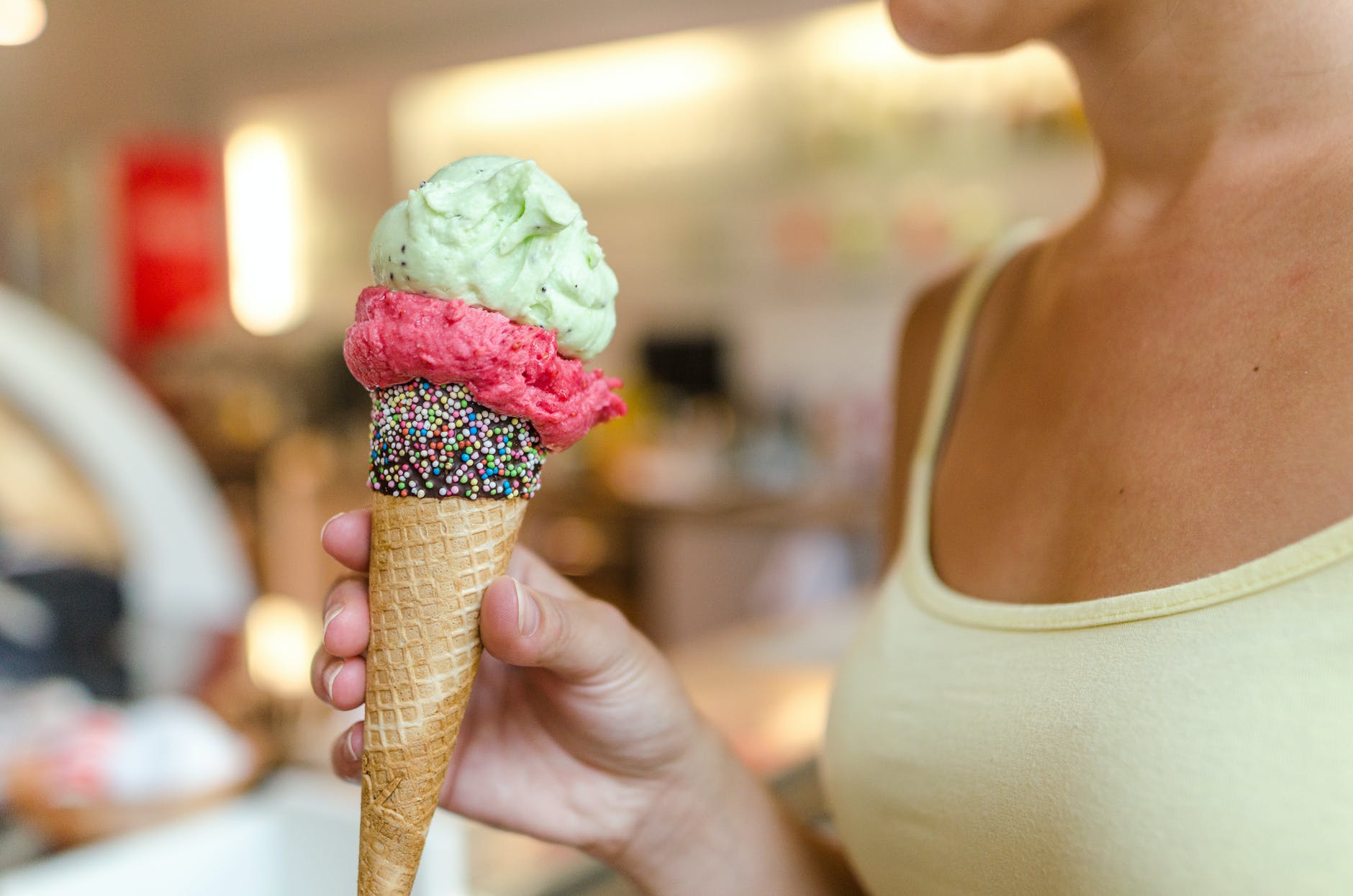
As the rain passes and the clouds shift west over the Gulf of Mexico, the moisture evaporates from the warm pavement, sending the humidity up like a heavy blanket. Seeking relief from the midday mugginess, local residents look for ways to cool down. What better way to beat the heat than treating yourself—or the whole family—to a scoop from your favorite neighborhood ice cream shop?
Whether you are exploring the heart of Downtown or heading north toward the Honeymoon Island Causeway, Dunedin offers plenty of spots to grab our favorite summertime treat. Below is a convenient list of local ice cream shops and their addresses to bookmark for your next stroll along our Suntropolitan coast.
Strachan’s Ice Cream & Desserts: A Local Legacy
One of my favorite spots for creamy, smooth, homemade ice cream is Strachan’s Ice Cream & Desserts. Serving up double and triple scoops of slow-churned frozen cream at 310 Main Street since 1999, Strachan’s has become a true local institution.
With two excellent locations to choose from—Palm Harbor and Downtown Dunedin—a fresh scoop is never far away. If you appreciate scratch-made desserts and classic charm, head over to Strachan’s for a taste. You will not be disappointed.
Lane’s Lemonade
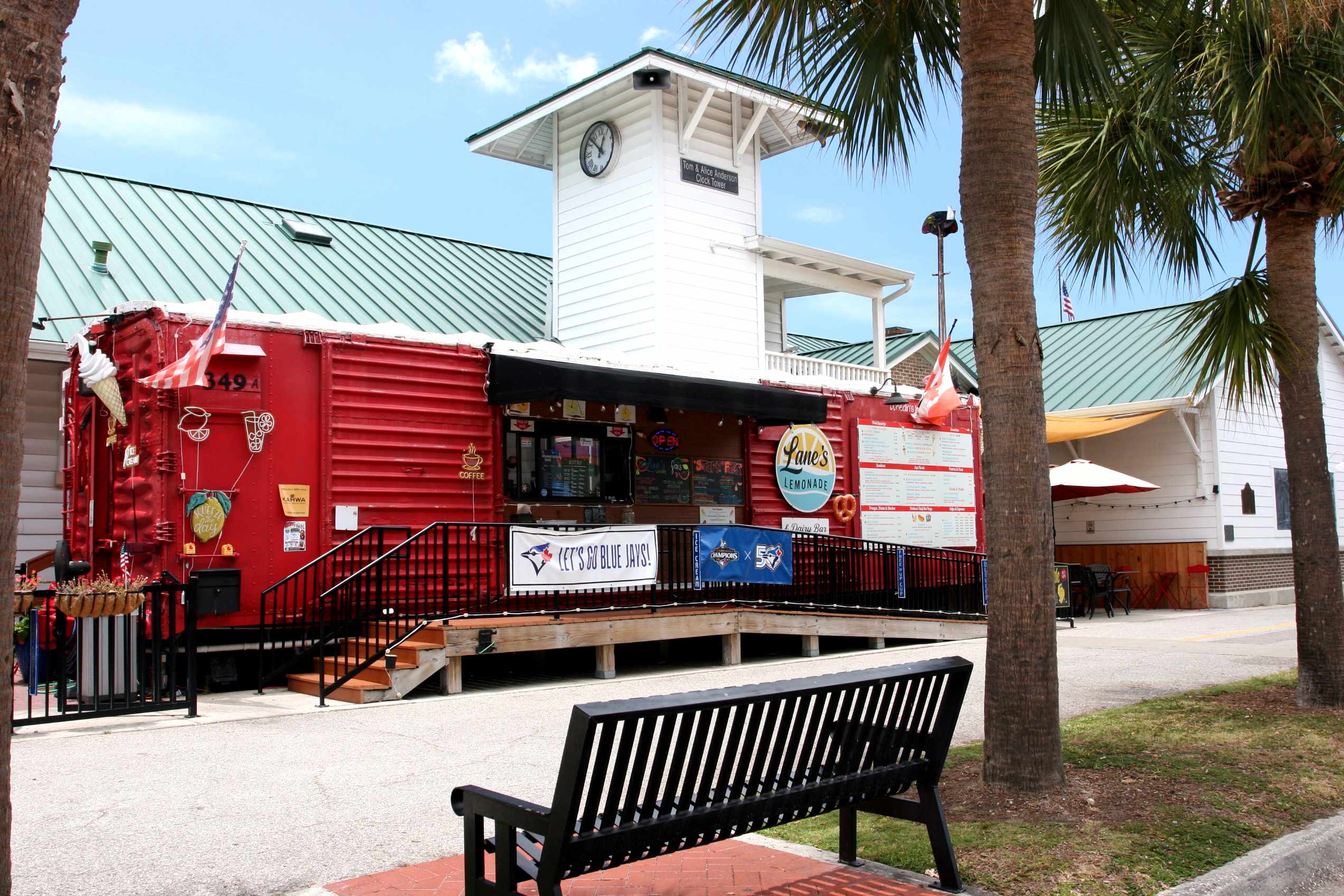
Located right next door to the Dunedin History Museum and just steps off the Pinellas Trail, you will find Lane’s Lemonade. Serving up refreshing soft-serve ice cream alongside fresh lemonade made with real lemons and sugar, it asks a simple question: What says summer quite like ice cream and lemonade?
Lane’s Lemonade – Downtown Dunedin
Location: 349 A Main St, Dunedin
This beloved hydration station operates out of a cute, converted red train car, adding vibrant historic charm to the old train station grounds that once anchored our downtown corridor.
Ice&Cream Creamery
Offering a little something for the kids and a unique treat for the adults, Ice&Cream Creamery boasts a massive selection of over 48 flavors. Alongside their traditional, ultra-creamy classics, they scoop up an incredible lineup of alcohol-infused ice creams.
Ice & Cream Creamery & Coffee – Downtown Dunedin
Location: 200 Main St #109
Serving multiple locations from St. Pete Beach to Downtown Dunedin, this locally-made, small-batch creamery has truly got our Gulf beaches covered.
Dunedin’s Ice Cream Trail
Whether you are walking the Pinellas Trail, strolling down Main Street, or heading to the beach, here is where to find your next scoop in Dunedin.
Downtown Dunedin
Shop
Location
Notes
Strachan’s Ice Cream & Desserts
310 Main St
Local favorite since 1999. Waffle cones made fresh in-house.
Ice&Cream Creamery
200 Main St #109
Over 48 unique flavors, including alcohol-infused ice creams. Generous scoop sizes. Open late—9:30 AM to 10 PM (11 PM Friday–Saturday).
Galvin’s Goodies
990 Broadway
Offering refreshing açaí bowls and premium ice cream inside The West End Market.
Converted red train car serving soft-serve and fresh lemonade. Try the orange swirl—a historic nod to Dunedin’s rail-citrus past!
Honeymoon Island / Causeway Area
Shop
Location
Notes
Sunset Smoothies and Ice Cream
2606 Bayshore Blvd (Causeway Plaza)
Located in the Causeway Plaza. Perfect stop after a day at Honeymoon Island. Offers oat milk, almond milk, vegan, and sugar-free options.
A Personal Note
Ice cream tastes better when you eat it outside in the heat, with the sun drying the pavement and the clouds drifting overhead. That is not science—that is just Dunedin. Whether you are walking downtown or heading home from the beach, there is a scoop waiting for you. This summer, I plan to visit every shop on this list. Maybe I will see you in line.
Stay cool, eat ice cream, and support the local shops that make our town sweet.