All posts tagged: History

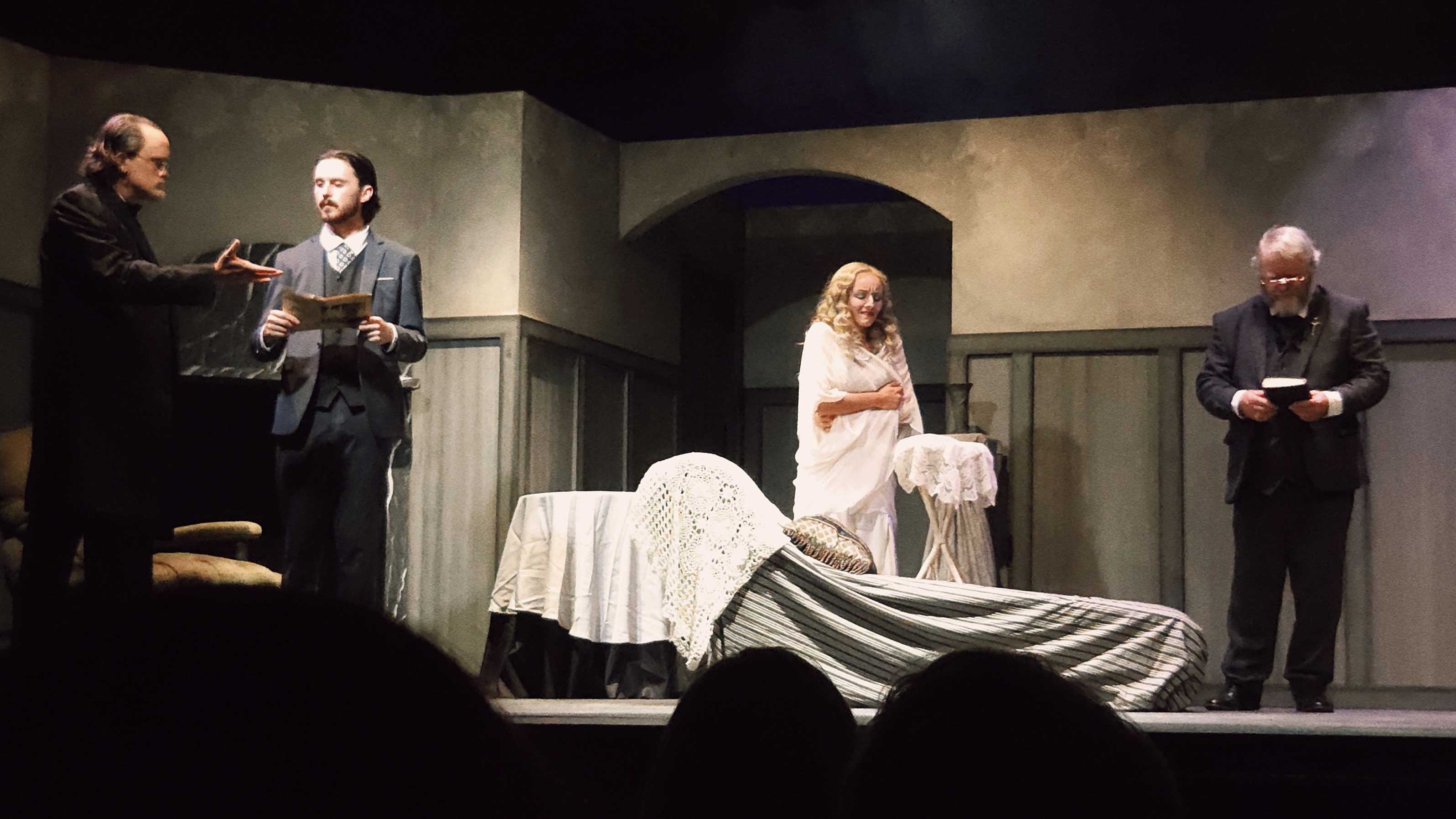
Four actors performing in period costumes on the Francis Wilson Playhouse stage under dramatic lighting. In the center, Lucy stands dressed in a white gown with a visibly pained, ill expression. To the audience's left, Jonathan and Dr. Seward are engaged in a tense conversation, while on the audience's right, Dr. Van Helsing stands alone, intently reading through a handwritten notebook.

Dracula: On Stage at Francis Wilson Playhouse

It was opening night—October 23, 2026. A crystal-clear, cool, beautiful autumn evening with a near-full moon rising overhead. Cars pulled up to drop off guests at the door of the Francis Wilson Playhouse, located just north of Downtown Clearwater, for a special staging of Bram Stoker’s Dracula. Celebrating its 97th season just in time for spooky season, the playhouse presented a striking rendition of Dracula, adapted by Drew DeCaro and Tracy Lange. Tonight’s cast: Actor Role Christopher Rogers Dracula William Letmon Prof. Van Helsing Logan Scourtes Dr. Seward Chloe Adair Lucy Ethan White Jonathan Harker Pamela Torres Renfield Martin J. McAuliffe Butterworth Jessica Ramsdell Miss Wells The Lobby Stepping into the lobby, I was instantly greeted by a cozy, living-room atmosphere—a fireplace lit with candlelight and a beautifully lit chandelier overhead. While the building is historic, it is meticulously maintained. You can immediately feel the deep love and dedication shared by the cast, crew, staff, and local supporters. Community. That is what stuck out. As I walked into the auditorium, the faint, comforting scent of …

From Rogue Art to Local Legend: The Story of Dunedin’s Oranges

It was 2009. The economy had nose-dived, and foreclosures dominated the news. Across the country, people were losing their homes, their jobs, and their sense of certainty. But in Dunedin, something else began to appear on the walls. Oranges. No one knew who painted them. No one knew why. Merchants woke up to beautifully rendered citrus on their roll-down gates. Homeowners discovered oranges beside their front doors. Most residents loved stumbling across them, and guessing the culprit’s identity became a running community joke. The phenomenon grew so popular that some merchants even posted notes on their walls reading, “Hey, paint orange here!“ The mystery deepened when a downtown restaurant’s surveillance camera caught two figures in the act at 5:30 A.M. The tape was turned over to the Pinellas County Sheriff’s Department. Once authorities began asking questions, the culprits came forward and confessed. Steven Spathelf, a local muralist, and Marsha Goins were the artists behind the “Orange Graffiti.” No charges were filed. When asked why they did it, their response was simple: they wanted to champion …

Juneteenth in Dunedin: A Day of Recognition, Restoration, and Celebration

The scent of steamed and boiled seafood filled the air. Eli’s Barbecue added its own smoky note. Children laughed and played. Music drifted across Pioneer Park. Under a clear sky, a cool breeze kept everyone comfortable as the City of Dunedin came together on a warm June evening to celebrate Juneteenth—a day of recognition, restoration, and celebration. The Gathering Presented by Dunedin Parks & Recreation, the event was free and open to all. Craft vendors lined the grass. Food vendors served up local favorites. Families spread out on blankets and folding chairs. Friends greeted friends they had not seen since last year’s celebration. The evening was just like any other in Dunedin—except that it was not. It was a day set apart. A day to remember. A day to lift every voice. The Entertainers and Vendors The event featured a rich array of local talent and small businesses: Special performances included the St. John Primitive Mass Choir, the Mt. Olive AME Mass Choir, Thee Poetic Prophet, and Crystal Latrece. The Harmony of Liberty The most …

AI generated birthday cake celebrating 100 years.

A Century of Leadership: Dunedin Marks 100 Years as a City

This year, Dunedin turns 100. Not the town itself—that story goes back much further, to Scottish settlers in the late 1800s and the citrus groves that followed. But on June 1, 1926, something changed. The Town of Dunedin officially became the City of Dunedin, adopting the Commission-Manager form of government that still guides us today. It is a centennial worth marking. 1926: The Year Everything Shifted Before 1926, Dunedin was a town. Small. Growing. But by the mid-1920s, the community had reached a point where the old ways of governing no longer fit. The solution was the Commission-Manager system—a structure that separates policymaking (the elected commission) from day-to-day administration (a professional city manager). It was a modern approach for a town ready to become a city. On June 1, 1926, that vision became official. Dunedin was incorporated as a city, and the new government took shape. What Happened That Year While Dunedin was finding its footing as a city, the world around it was shifting too. A few notes from 1926: And here, on the …

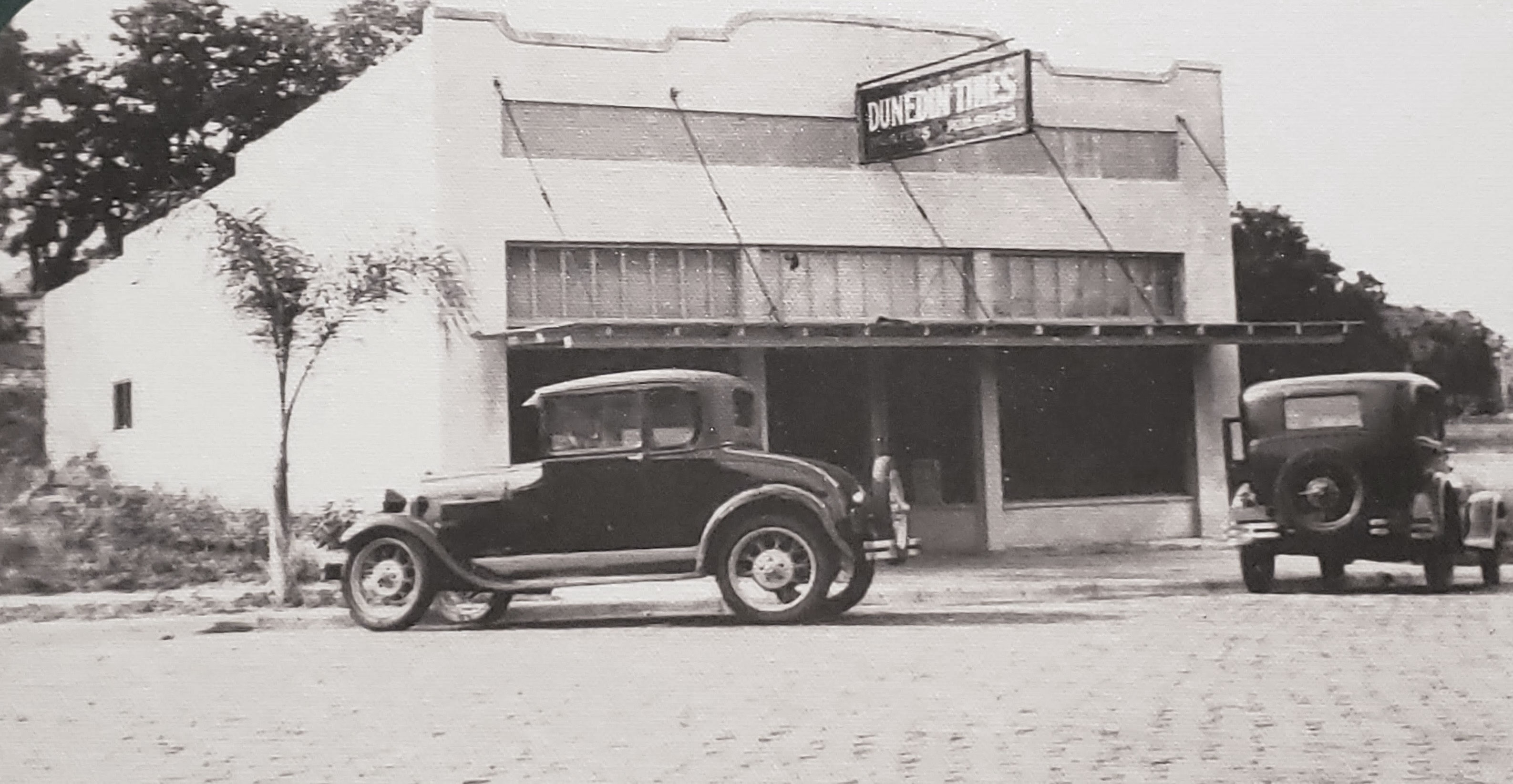
Historical black and white photo of the single-story Dunedin Times Newspaper building with a wooden hanging sign above the entrance and two vintage Ford Model T cars parked in front.

Before The Suntropolitan: The Story of Dunedin’s First Newspaper

Every time I publish an article, I think about the people who did this before me. Before websites. Before Instagram. Before cameras that fit in your pocket. They set type by hand. They printed on presses that weighed as much as a car. And they delivered the news to a town so small that a newspaper could fit on four pages and still cover everything worth saying. This is the story of Dunedin’s first newspaper—and the people who kept it going for nearly a century. The First Ink: 1884 The city of Dunedin first encountered printed news in late July 1884 . The paper was called the West Hillsborough Times, and it served the larger county that Dunedin was still part of at the time. It was a modest operation. The paper ran just four pages. The first and last pages carried local news—the births, deaths, meetings, and moments that mattered to a small farming town. The second and third pages were filled with general reading material and entertainment articles, purchased from a firm in …