
Every time I publish an article, I think about the people who did this before me. Before websites. Before Instagram. Before cameras that fit in your pocket.
They set type by hand. They printed on presses that weighed as much as a car. And they delivered the news to a town so small that a newspaper could fit on four pages and still cover everything worth saying.
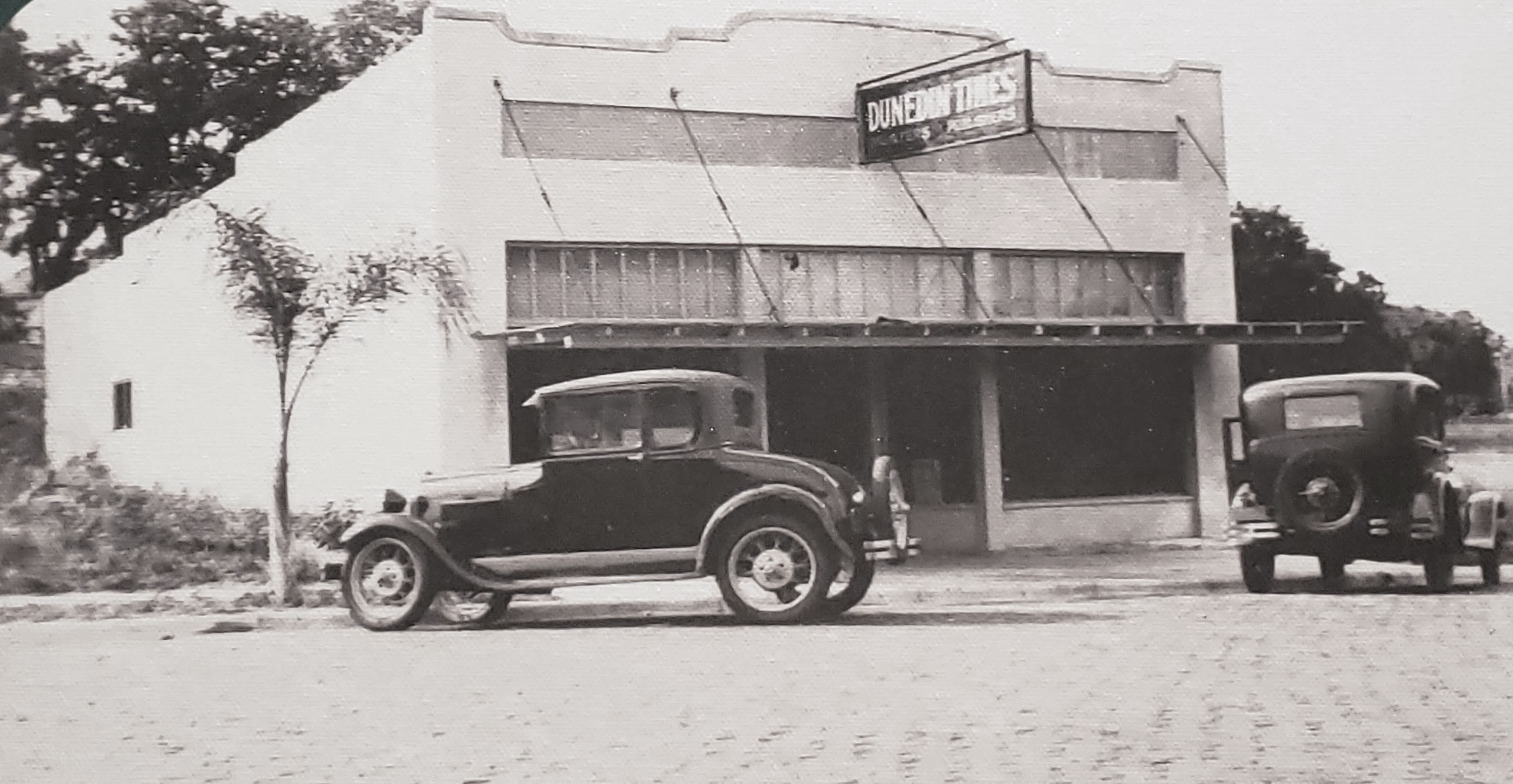
This is the story of Dunedin’s first newspaper—and the people who kept it going for nearly a century.
The First Ink: 1884
The city of Dunedin first encountered printed news in late July 1884 . The paper was called the West Hillsborough Times, and it served the larger county that Dunedin was still part of at the time.
It was a modest operation. The paper ran just four pages. The first and last pages carried local news—the births, deaths, meetings, and moments that mattered to a small farming town. The second and third pages were filled with general reading material and entertainment articles, purchased from a firm in Atlanta and inserted for subscribers to enjoy.
For nearly a decade, that was enough. Then, in 1892, the paper was sold. The new owner moved its operations to St. Petersburg and changed its name. Dunedin was suddenly without a newspaper of its own.
For forty years, the town went uncovered.
A New Beginning: 1924

On February 7, 1924, a local resident named Frank E. Joy decided to fill the gap. He saw the demand. He saw the silence where news should be. And he started the Dunedin Times.
Joy wore many hats—publisher, proprietor, general manager. He ran the business out of a frame house on Scotland Street, serving not just Dunedin but the neighboring villages and farms that had no other source of local news.

A year’s subscription cost two dollars. For that price, readers received local news, short stories, cartoons, photographs, and more.
But the town was still small. Circulation was poor. After less than two years, Joy sold the paper.
The Watersons: A Mom-and-Pop Legacy
The paper changed hands several times over the following years. Then it fell to a woman named Mrs. C.W. Cleary.
Cleary hired a young man fresh out of high school named Elbert Waterson. He was hardworking and capable. Within three years, he was made manager—a position he held for a decade.
Waterson eventually left for a brief stint at the Clearwater Sun. But when he heard that Mrs. Cleary was putting the Dunedin Times up for sale, he saw his chance.
In 1944, Elbert Waterson and his wife purchased the newspaper.

What followed was the most successful era in the paper’s history. The Watersons ran the Dunedin Times as a true mom-and-pop operation. Mrs. Waterson handled secretarial work, reception, and sold ads. Elbert did everything else: reporting, photography, operations, printing, and even delivery.
Together, they grew the paper tenfold. They upgraded the printing equipment. They expanded each issue to twenty-four pages . They turned a struggling small-town paper into a respected institution.
The Final Years
By 1963, things were changing. The population was growing. Honeymoon Island was drawing more visitors. Readers wanted a daily paper, not just a weekly.
The Watersons sold the Dunedin Times to Harold P. Meyer and his associates, who took on the challenge of a daily edition.


The paper printed reliably until 1966. After that, publication became intermittent. The final issue rolled off the presses sometime around 2000.
The Archive Lives On
Today, the Dunedin Times is remembered as one of the first successful business enterprises in the city’s history.
And thanks to the Dunedin History Museum, its legacy is preserved.
The museum houses the only complete collection of the Dunedin Times from 1924 to 1966, along with a partial collection from its later years . In collaboration with the City of Dunedin and the Dunedin Public Library, they have created a comprehensive digital archive of the paper’s run.
The archive is accessible to the public at both the museum and the library or online—a gift to anyone who wants to page through history, find family members, or simply see what Dunedin looked like through the eyes of its first journalists.
What It Means to Me
I think about the Watersons often.
Mrs. Waterson selling ads at the front desk. Elbert developing photos in a darkroom, setting type, printing pages, then delivering them himself. Two people doing the work of ten because they believed their town deserved a newspaper.

That is the same belief that drives The Suntropolitan.
I do not have a printing press. I do not deliver papers. But I do take the photos, write the articles, sell the ads, and answer the emails. I am one person, doing what I can, because Dunedin still deserves to be documented.
The Dunedin Times is gone. But its spirit—independent, local, hands-on—is exactly what I am trying to carry forward.
Visit the Archive
If you would like to explore the Dunedin Times archive for yourself:
Location Details
Dunedin History Museum 349 Main St, Dunedin, FL. Open Tuesday–Saturday, 11 a.m. – 5 p.m. Sunday, 12 p.m. — 4 p.m. Admission: $5 adults, $4 seniors, and children (under 12 years old) free.
Dunedin Public Library Digital access available on-site or online.
You can also contact the museum for research appointments:
- 📧 info@dunedinmuseum.org
- 📞 727-736-1176
- Digital archive are available at https://dunedin.historyarchives.online
The Suntropolitan is grateful to the Dunedin History Museum for preserving this history—and for letting us stand on the shoulders of those who came before.
📚 Sources
Information Source
Dunedin Times historical timeline and quotes Dunedin History Museum Archives and Dunedin Public Library
Roadtrippers , Idealist , Patch
Archive format (electronic/CD) Roadtrippers , AmericanTowns
Museum mission and collections Idealist , Kids encyclopedia
Next Article:


Discover more from The Suntropolitan
Subscribe to get the latest posts sent to your email.